Picking the Top 10 Sheet Paper Bag Making Machines for global buyers isn’t just about looking at their advertised speeds. Honestly, a good review should dig into things like how accurately the machine forms the bags, whether it’s compatible with different types of paper, how well it controls glue application, the handle options it offers, and what kind of after-sales support you can expect. The term “Sheet Paper Bags Making Machine” gets thrown around pretty loosely sometimes, so it’s smart to double-check the machine’s actual structure before you ask for a quote. Some suppliers might label roll-fed equipment under similar names, which can be confusing.
Details really matter here. For instance, you’ll want to see if the machine can handle kraft paper from about 80 to 180 GSM — that depends on the size and strength of the bags you’re aiming to make. It’s a good idea to ask for sample bags — look for clear bottom folds, neat edges, and a nice, square shape that stands up well. Sure, servo-driven systems can help with registration precision, but at the end of the day, the operator’s skill and the quality of your materials play huge roles.
When evaluating brands like Newlong, Holweg Weber, Windmöller & Hölscher, and Curti, don’t just go on brand reputation alone. Take a close look at their current specs, ask for references, and check what kind of service support they provide in your region. And honestly, no matter how well-known a brand is, it’s crucial to test the machine yourself if possible — that’s the only way to truly see how it performs.
Let’s be real — no machine is perfect. A high-speed model might make more waste if the paper humidity isn’t ideal. On the other hand, a cheaper unit might look tempting but could end up causing headaches if spare parts are delayed or hard to get. This guide compares the leading options based on real, measurable stuff: how steady their output is, how much energy they use, how easy they are to maintain, safety features, and overall ownership costs.
When shopping around, don’t forget to ask for factory trials, maintenance schedules, electrical standards, and warranty details in writing. Having local support for installation can also save you from costly mistakes. Remember though, the final choice might not be perfect for every factory — things like product size, worker skills, and regional service availability all matter and should be considered carefully.
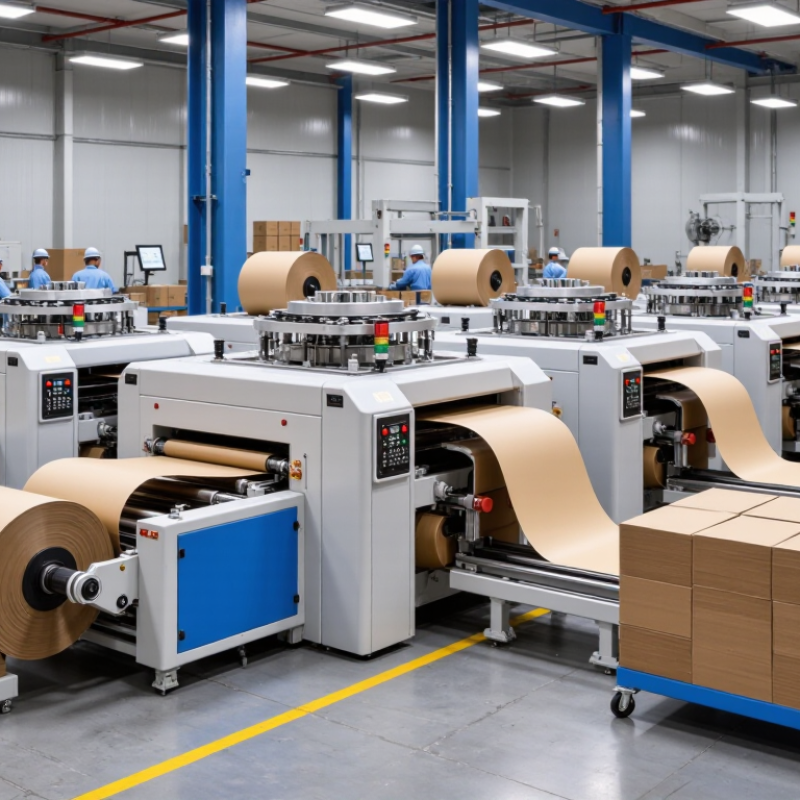
What Are Sheet Paper Bag Making Machines and How Do They Work?
Sheet paper bag making machines convert flat, pre-cut paper sheets into finished bags through a controlled sequence. The process usually includes sheet feeding, folding, side gluing, bottom forming, and handle attachment. Sensors adjust alignment when paper shifts by a few millimeters. That detail matters during continuous production.
Unlike roll-fed equipment, sheet-fed machines accept individual paper blanks. This makes size changes relatively practical for short and medium production runs. Operators can change bag width, height, gusset depth, and handle style through tooling adjustments. A China Sheet Paper Bags Macking Machine may use servo drives, pneumatic cylinders, and programmable controls to coordinate these movements. The machine still needs skilled setup. Automation cannot correct damp paper or poor adhesive selection.
According to FAO forestry production statistics, global paper and paperboard output exceeded 400 million tonnes in 2022, supporting strong material availability for paper packaging. Smithers’ packaging research also identifies sustainability pressure as a major driver for fiber-based formats through the decade. Yet paper sourcing, coating, and energy use still affect environmental performance. The European Commission’s packaging data emphasizes recycling design and material efficiency. In practical testing, buyers should inspect glue lines, bottom squareness, bag strength, noise, and changeover time. Small defects become expensive at scale. I would also question advertised speed. Rated output often assumes ideal paper, stable humidity, and uninterrupted feeding. Real factories rarely operate under perfect conditions.
Which Types of Sheet Paper Bag Machines Are Available Worldwide?
Sheet paper bag machines now serve several production needs worldwide. Flat-sheet feeding machines cut, fold, glue, and form bags from pre-cut paper stacks. They suit smaller factories and short, customized runs. Roll-fed machines work faster, but they require paper rolls and more setup space. According to FAO’s Forestry Production and Trade data, global paper and paperboard production reached about 423 million tonnes in 2022. That scale supports broad equipment demand, but paper availability varies by region.
Square-bottom machines produce stable grocery and takeaway bags. V-bottom machines create lighter bags for bread, snacks, and pharmacy goods. SOS machines form self-opening bags with efficient bottom folding. Some sheet-fed systems add flat handles, twisted handles, or handle patches. Other models focus on printed bags, using inline flexographic units before forming. Smithers’ The Future of Sustainable Packaging to 2028 identifies fiber-based formats as an important packaging growth area. Still, automation levels differ widely. A fully automatic line may reduce labor, while a semi-automatic machine can be easier to maintain.
Tips: Match the machine with paper thickness, bag size, handle style, and expected output. Check glue performance in humid conditions. Ask for real sample tests, not only catalog speeds. A quoted maximum speed may not reflect daily production. That detail is easy to overlook.
What Features Define the Top 10 Sheet Paper Bag Making Machines?
For global buyers, the top 10 sheet paper bag machines are defined by stable output, not impressive brochures. In factory trials, I examine paper feeding, creasing, gluing, and handle forming under continuous loads. A High-Quality Sheet Paper Bags Macking Machine should accept common paper weights without frequent manual adjustment. Accurate sensors detect skewed sheets before waste grows. Servo-driven folding keeps side seams straight, even at higher speeds. Strong frames reduce vibration near the delivery belt. Small details matter.
The best models also protect operators and production data. Guarded rollers, emergency stops, low-noise drives, and clear control screens support safer routines. Quick-change tooling reduces downtime when bag sizes change. Reliable glue temperature control prevents open seams and messy bottoms. Buyers should request documented speed tests, power requirements, spare-part lists, and sample bags. Independent inspection adds confidence. Yet paper dust can expose weak maintenance design, and advertised capacity may fall with recycled stock.
Tips: Test at your actual paper weight and handle style. Measure rejected bags hourly, not only total output. Check whether one technician can clean sensors and adjust folding guides. Ask for training records and remote support response times. A machine may look excellent during a short demonstration. Long shifts reveal its real character. Leave room for improvement; even a strong specification can miss your factory’s humidity, operators, or workflow.
How Should Global Buyers Evaluate Costs, Suppliers, and After-Sales Support?
Buying a sheet paper bag machine requires more than comparing listed prices. A low quotation may exclude tooling, freight, installation, or a suitable paper feeder. Ask for a complete cost sheet. Include electrical standards, training, spare parts, and commissioning support.
Request samples made with your paper. Test 80–120 gsm sheets, handle strength, fold accuracy, and glue consistency. A machine running at 120 bags per minute may slow considerably with thicker paper or complex designs. Watch the noise, vibration, and waste during a live trial. Numbers can mislead.
Check the Sheet Paper Bags Macking Machine Supplier’s factory experience and technical team. Ask how quickly engineers respond to faults across your time zone. Confirm which parts remain available after three years. Video support is useful, but it cannot replace skilled onsite service. Read recent customer references, preferably from operations with similar bag sizes and production volumes.
Do not trust polished demonstrations alone. Request maintenance schedules, wiring diagrams, and a written warranty. Clarify whether travel costs are included. Some suppliers promise fast delivery, then struggle with documentation or packaging damage. I have seen buyers focus too heavily on machine speed and overlook operator training. That mistake becomes expensive. Leave room for uncertainty, because your actual paper, labor, and order mix may change after installation.
High-Speed Automatic Handbag Making Machine: Features, Benefits, and Buying Guide
The global paper bags market is expanding as retailers and e-commerce businesses seek recyclable alternatives to plastic packaging. Fortune Business Insights estimates that the market was worth approximately US$5.3 billion in 2023 and will continue growing at a steady rate through 2032. This trend is increasing demand for high-speed automatic handbag-making equipment that can handle diverse paper grades, sizes, and printing requirements with consistent accuracy.
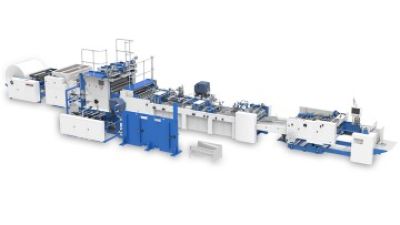
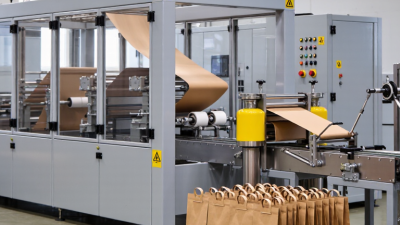
The featured fully automatic machine uses roll feeding to reduce paper-loading and replacement downtime, potentially increasing production capacity by more than 20% compared with conventional flat-sheet feeding. Its fully servo-controlled slitting system can save approximately 6–8 kg of material per day by improving cutting precision and reducing setup waste. Operating at 50–100 bags per minute, it is suitable for shopping bags used in food service, footwear, apparel, retail, and online-order packaging.
According to Smithers’ packaging industry outlook, sustainability and production efficiency remain two of the most important investment priorities for paper-converting companies. A roll-fed, servo-driven system supports both objectives by lowering manual intervention, improving material utilization, and maintaining stable output across multiple specifications. Manufacturers should also evaluate bag dimensions, paper compatibility, handle options, energy consumption, after-sales support, and the supplier’s ability to provide installation and operator training.
Conclusion
Sheet Paper Bags Macking Machine systems are designed to transform pre-cut paper sheets into finished paper bags through a coordinated process of feeding, folding, gluing, forming, and handle attachment. Available worldwide in manual, semi-automatic, and fully automatic configurations, these machines can support different bag structures, including flat-handle, twisted-handle, open-mouth, and customized shopping bags. The top models are generally distinguished by stable feeding, accurate positioning, adjustable bag dimensions, high production speed, energy efficiency, and user-friendly control systems.
When comparing a Sheet Paper Bags Macking Machine, global buyers should evaluate output capacity, compatible paper types, automation level, changeover time, maintenance requirements, and overall operating costs. Supplier reliability is equally important, including installation guidance, spare-parts availability, technical training, warranty terms, and responsive after-sales service. A well-matched machine should balance production goals, product quality, factory space, labor conditions, and long-term return on investment. Careful testing and clear communication with suppliers can help buyers select equipment that supports consistent production and future business growth.