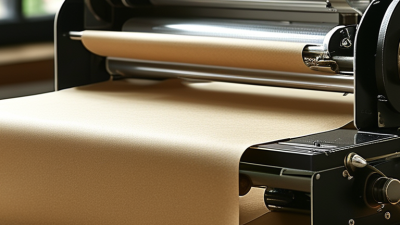
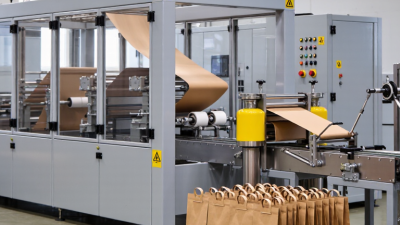
So, a paper Bag Making Machine basically takes rolls or sheets of paper and turns them into finished bags through a series of controlled steps. Depending on how it's built, it might unwind the paper, print or crease it, form a tube, apply glue, and then shape the bottom. Sensors and guides help keep everything aligned as it moves along. Of course, the exact process varies a bit depending on the machine, the style of bag you're making, and the type of paper you're working with.
Honestly, the job can feel pretty mechanical—but those little adjustments? They make all the difference. You’re constantly setting paper tension, tweaking folding positions, checking glue amount, and dialing in production speed. If a guide is even slightly off, you get uneven edges; too much adhesive and the bags are a pain to handle. Then the machine cuts and forms each bag, and usually stacks them for collection. Sounds straightforward, right? It takes a while to get the hang of. The real output depends on the material, how you set things up, and how much experience the operator has. So the rated speed? That only tells part of the story.
If you run a small shop or a smaller production setup, a compact paper bag making machine could be a real lifesaver—especially when floor space is limited or you're only doing shorter runs. People often search for things like 'small paper bag making machine' or 'small paper bag machine,' and those usually point to compact equipment. But honestly, you really need to check the specs carefully. Also, just because a machine is a small square-bottom paper bag machine doesn't mean it can handle every bag format out there. Before you settle on a model, it's worth sitting down with the manufacturer and comparing a few things—bag dimensions, paper weight range, changeover requirements, and what kind of service support you can expect. The guide breaks down the main parts of the machine, how the paper moves through each one, and the practical little details that are easy to overlook. Honestly, even a spec sheet that looks super clear can leave you scratching your head. So verifying things yourself? That's where the real peace of mind comes from.
A paper bag making machine is converting equipment that turns rolls or sheets of paper into folded, glued bags. A Paper Bag Making Machine Making Machine typically feeds paper through rollers, forms a tube, seals its side seam, and cuts it to length. Some configurations also fold the bottom and attach handles. The exact sequence depends on bag style and machine design. On a working line, operators watch paper tension, glue application, and alignment; a small drift can leave a crooked seam or uneven base. That detail matters.
The scale of paper supply gives this equipment broader context. FAO’s Yearbook of Forest Products 2022 reports global paper and paperboard production of about 401 million tonnes in 2022. This is not a measure of bag output, but it shows the size of the material stream that converters draw from. A machine does not make every paper suitable: basis weight, stiffness, moisture, and coating affect how reliably it folds and bonds. Setup is rarely perfect on the first run. Even an experienced operator may need to adjust tension after a roll change, and that practical limitation deserves attention when comparing machine capabilities.
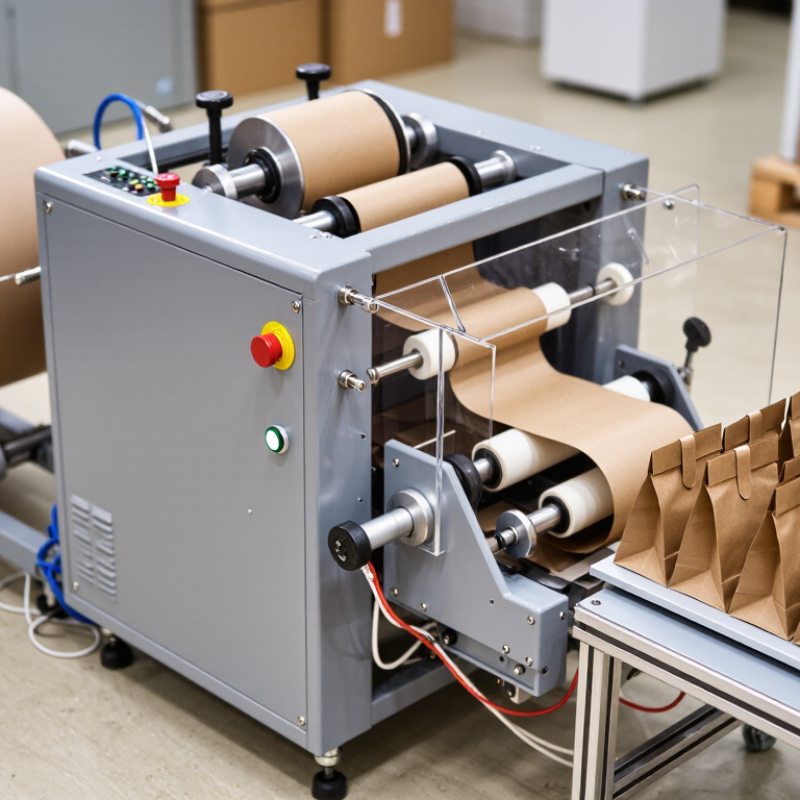
A paper bag making machine turns a continuous paper roll into cut, folded, and glued bags. Its roll stand holds the paper, while feed rollers guide it forward. Tension controls help prevent wrinkles or uneven feeding. Some machines also include a printing unit for adding simple designs before the paper is formed.
A forming section bends the paper into a tube and creates side gussets. Glue nozzles apply adhesive along the seam. A cutting unit separates the tube into bag lengths, then folding plates shape each bottom. Depending on the setup, a handle unit may attach paper handles. Sensors monitor alignment and paper flow, while the control panel lets an operator adjust speed and timing. Small details matter. A slight glue shift can leave a weak seam.
Tips: Check paper tension, glue flow, and fold alignment during setup. Test a few bags before a full run. Settings vary by paper weight and machine design, so a reliable process may still need careful adjustment.
Paper bag machines commonly take paper from a roll, though some models accept pre-cut sheets. The roll sits on an unwind stand, where tension controls help keep the paper moving steadily. Kraft paper is widely used because it folds well and handles routine production demands. Its weight must still suit the bag size and expected load. Paper that is too thin may split at the seams; heavier stock can resist tight folds. Small detail, big effect. Before feeding, operators check roll width, edge condition, moisture, and print direction. Damp or curled paper may wander, leaving uneven side folds or a crooked bottom. These checks sound routine. They are not optional.
Depending on the machine, handle paper or paper rope may feed from a separate reel, while adhesive comes from a tank or metering unit. Pre-made handles may enter at a dedicated station. Every feed path needs attention: loose fibers, rough splices, and uneven winding can interrupt production. Treat the phrase “China Paper Bag Making Machine Making Machine” as a prompt for practical checks. Confirm accepted paper width, basis weight, roll diameter, and handle options. Ask how settings change between paper stocks. A sample roll may run smoothly, while a humid, full-width roll behaves differently. That gap deserves a trial run. Record paper waste, fold alignment, and glue placement during testing.
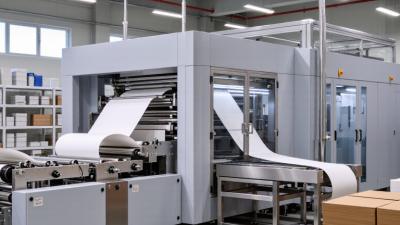
A paper bag making machine begins preparing the sheet well before the bag takes shape. On a roll-fed line, paper unwinds under controlled tension, passes through guides, and enters the printing unit. Flexographic plates transfer ink onto the moving web, often adding a logo, instructions, or a simple repeating pattern. Operators check registration, ink coverage, and drying; even slight web drift can leave a design visibly off-center. It looks simple. It isn’t.
After printing, the web is trimmed to the required width and cut into blanks. Sensors and feed rollers help keep each sheet aligned before creasing and folding. The paper’s weight and moisture matter: a damp sheet may stretch, while a stiff one can resist a clean fold. The American Forest & Paper Association’s 2023 industry report estimated that 65–69% of paper and paperboard was recovered for recycling in the United States. That figure supports attention to fiber choices, but it does not mean every recycled sheet runs equally well on a converting line.
Before bag forming, blanks may receive a bottom fold, side-gusset creases, and adhesive. These small preparations determine whether the bag opens squarely and carries weight without splitting. I would not treat machine settings as universal; paper batches vary, and a short test run can reveal problems that a specification sheet misses. One crease too deep can weaken the panel.
A paper bag takes shape through a controlled sequence of feeding, folding, and bonding. The machine draws a paper roll forward and cuts a measured sheet for each bag. Roll tension matters: too loose, and the sheet may drift; too tight, and it can tear. Small shifts matter. Guides align the sheet before rollers fold it into a tube, forming the side seam with adhesive or heat-activated bonding, depending on the material and machine design.
Next, a folding unit creates the bottom panel. A mechanical gripper or forming plate opens and presses the folds into place, while adhesive secures the layers. Some machines add handles before or after this step. The exact order varies. A High-Quality Paper Bag Making Machine Making Machine should maintain consistent pressure and timing, but operators still need to check glue flow, fold alignment, and paper moisture. Even a well-adjusted line can produce a crooked seam when the roll changes. A few sample bags help reveal problems before a full run continues. The finished bags are counted and stacked for inspection.
| Stage | Main Machine Section | What Happens | Key Setting or Check | Result |
|---|---|---|---|---|
| 1. Paper feeding | Roll stand or sheet feeder | Paper is supplied from a roll or as pre-cut sheets, depending on the machine design. Tension and alignment systems help guide it into the forming section. | Paper width, roll alignment, tension, and material condition | A steady, correctly positioned paper web or sheet |
| 2. Printing, if fitted | In-line printing unit | Some machines print graphics or product information on the paper before the bag is formed. Other machines receive paper that has already been printed. | Print registration, ink coverage, and drying requirements | Printed paper positioned for bag forming |
| 3. Tube formation | Folding former and side-seam unit | The paper is folded around a forming section to create a tube. An overlapping edge is bonded to make the longitudinal side seam. | Tube circumference, fold alignment, adhesive application, and seam overlap | A continuous paper tube with a bonded side seam |
| 4. Bag-length setting and cutting | Length control and cutting unit | The tube is divided into individual bag blanks at the selected length. Depending on the machine, cutting may be synchronized with the tube feed. | Cut length, cut position, and synchronization | Bag blanks of the intended length |
| 5. Bottom formation | Bottom-folding and bonding section | The end of each blank is folded into a bottom shape and bonded. Flat-bottom and V-bottom bags use different folding sequences and tooling. | Bottom dimensions, fold accuracy, adhesive coverage, and bond quality | A formed and sealed bag bottom |
| 6. Handle application, if required | Handle-making and attachment unit | For handled bags, paper handles or other compatible handle components are made or fed into the line and attached to the bag. | Handle position, attachment strength, and alignment | A bag with handles securely attached |
| 7. Inspection and counting | Sensors, operator checks, and counting system | The line may monitor registration, feeding, or other process conditions. Finished bags are checked for defects and counted into batches. | Seam and bottom appearance, dimensions, print position, and count | Checked bags grouped for delivery or further packing |
| 8. Stacking and output | Delivery conveyor or stacking unit | Completed bags are collected and arranged for removal from the machine. Some lines include automatic stacking or bundling equipment. | Stack alignment, bundle quantity, and handling condition | Finished bags ready for packing and distribution |
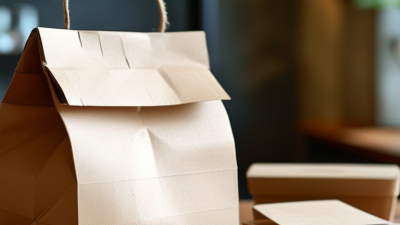
Paper bag machines are commonly grouped by the bag shape they produce. V-bottom machines make narrow bags often used for snacks, takeaway items, and small retail goods. Square-bottom machines create bags that stand upright and suit groceries, clothing, or bakery orders. Handle-making units may be built into a line or used separately, depending on production needs.
Most machines feed paper from a roll or stack, print or crease it when configured, then fold, glue, and cut it into bags. Roll-fed lines can support steady, high-volume production, while sheet-fed equipment may suit shorter runs or varied sizes. A machine’s speed matters, but so do paper weight, bag dimensions, glue control, and changeover time. The phrase “CE Certification Paper Bag Making Machine Making Machine” may appear in searches; the phrase alone does not verify a machine’s certification or performance.
Tips: Match the machine to the bag you actually sell. Check sample bags for square corners, secure seams, and consistent handles. Ask for a trial using your paper stock. Small details matter. A fast line can still waste material if settings drift.
The outlook for nonwoven bags is closely tied to demand for lightweight, reusable packaging and the wider growth of nonwoven materials. A 2023 industry market report estimated the global nonwoven fabric market at USD 53.9 billion in 2022 and projected a 6.1% compound annual growth rate from 2023 to 2030. Although this figure covers nonwoven fabrics broadly rather than bags alone, it points to a growing material base for packaging manufacturers. For factories responding to varied orders—from everyday shopping bags to gift bags—production equipment needs to combine speed, consistent output, and flexibility.
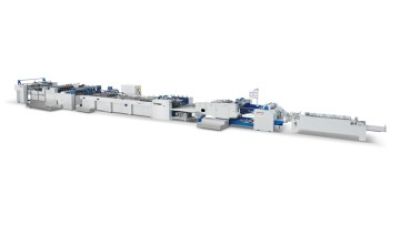
The ZB1650CT-600A is a fully automatic, double-piece handbag-making machine designed for large-scale production. Its control system supports straightforward operation and maintenance, while its adaptable production capability can help manufacturers serve different bag applications. The ZB1650CT-600BA double-piece handbag tube gluer complements the process with efficient, intelligent tube-gluing operations, helping improve workflow and production flexibility. Together, these machines offer packaging factories a practical route to scaling nonwoven handbag output as market demand and customer requirements evolve.
It turns paper rolls or sheets into folded, glued bags. The process may include forming a tube, sealing its side, cutting it, and shaping the bottom.
Common parts include a roll stand, feed rollers, tension controls, forming section, glue nozzles, cutting unit, and folding plates. Some setups also include printing or handle units.
Feed rollers guide paper from the roll stand into the forming section. The paper is shaped into a tube, glued along the side seam, then cut and folded.
Paper weight, stiffness, moisture, and coating can affect folding and bonding. A paper that looks suitable may still feed poorly. Not always.
Tension controls help keep the paper feeding evenly and reduce wrinkles. Check the paper after changing a roll; the previous setting may no longer work.
Watch paper tension, glue flow, and fold alignment. A small glue shift can weaken a seam, while a slight alignment drift can make the base uneven.
Yes. Make a few test bags and inspect the seam, bottom, and cut length before increasing production. Small shifts matter.
No. Handle attachment depends on the machine configuration. Some machines form bags without handles, so confirm the setup before planning a run.
A Paper Bag Making Machine is a production system that turns rolls or sheets of paper into finished bags through a series of coordinated steps. Its main components may include a paper-feeding unit, printing section, cutting mechanism, folding and forming stations, and sealing equipment. Each part prepares the material for the next stage, helping produce bags with consistent shapes and dimensions.
The process begins with suitable paper being fed into the machine, with printing added when needed. The paper is then cut to size, folded into a tube, and shaped to create the bag’s body. The machine seals the sides and bottom, and may form handles or reinforce areas for added strength. Different machine types are designed for different bag sizes, styles, materials, and production volumes, allowing manufacturers to choose a setup that fits their needs.