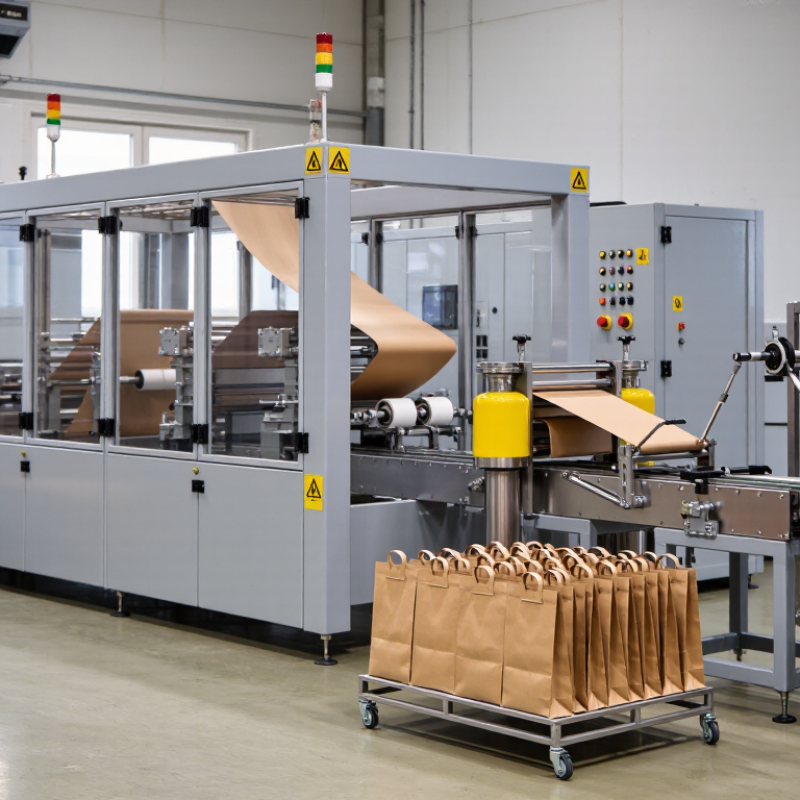
Choosing the right sheet feeding paper Bag Making Machine isn’t just about looking at speed charts. You gotta find a model that fits your paper size, the type of bags you want, handle options, and your daily production needs. For example, a machine that makes 180 bags per minute might not be so impressive if you're working with heavy kraft paper or complex gusset designs — those details really matter. So, make sure to check them carefully.
Look for machines with steady sheet feeding, precise folding, dependable gluing, and controls that are easy to tweak. It’s also important that operators can reach key rollers without stretching or risky moves. And when you're talking to suppliers, ask for sample bags made from your actual paper — don’t just rely on showroom samples. If you want handles like twisted, flat, or rope types, your machine might need extra modules, so double-check that. Also, don’t forget to test handle strength by doing some real pull tests. Even small alignment issues can cause wrinkles in the bags or waste sheets, so pay attention to those details.
When choosing a supplier, support counts just as much as the machine’s mechanical parts. Review their installation plans, spare parts availability, training options, warranty details, and whether they follow good quality procedures. It’s smart to ask for references from other customers — sometimes brochures don’t tell the full story, especially about service delays or issues. Before signing on the dotted line, get clear info on electrical specs and maintenance routines. And make sure the machine complies with safety and environmental standards relevant to your market.
Honestly, there’s no such thing as a perfect machine. Real factories deal with dust, fluctuating paper moisture, hurried operators, and occasional glitches. So, plan for some of that. When evaluating costs, look at the total operating expense—not just the initial purchase price. Doing a thorough comparison helps you pick equipment that produces consistent, quality bags, protects your materials, and remains practical even after the first year. The best choice comes from testing samples, reviewing detailed documents, and understanding your specific production needs — a little research goes a long way.
Understanding a sheet feeding paper bag making machine starts with its paper path, not its advertised speed. Unlike roll-fed equipment, it accepts pre-cut sheets and positions each blank with rollers, guides, and vacuum or friction feeding. This design suits short runs, varied sizes, and papers that are difficult to unwind. Watch the first ten bags. Misaligned side seams, curled edges, or weak folds reveal setup problems quickly. A stable frame matters too. Vibration can shift registration during a long production cycle.
When choosing a machine, match the sheet range to your actual orders. Check paper weight, blank dimensions, bottom style, and handle requirements. A sheet feeding small paper bag making machine with handle should form the handle securely, apply adhesive evenly, and keep it centered after folding. Ask for a live test using your paper, especially recycled or coated stock. Request measured waste, changeover time, and noise data. Speed claims alone can mislead. I have seen a slower machine produce more sellable bags because adjustments were simpler. Still, one test is not enough; repeat it after warming the machine.
Tips: Inspect feeder belts daily and remove paper dust before calibration. Use a sample sheet to set guides, then record the settings. Check glue temperature and open time, not only glue volume. Confirm emergency stops, guards, and operator access before purchase. Leave room for imperfect sheets. They happen. Ask about spare sensors, training, and service response in writing. A clear maintenance log often exposes recurring faults earlier than an impressive brochure.
| Selection Dimension | Typical Commercial Range | What It Means | Recommended Selection Guidance |
|---|---|---|---|
| Paper Material | Kraft paper, bleached paper, recycled paper, or coated paper | Paper surface, stiffness, moisture, and coating affect feeding, folding, gluing, and print quality. | Confirm that the machine feeder and glue system are compatible with the exact paper grade and surface treatment. |
| Paper Grammage | Approximately 40–120 g/m² for common paper bags; some configurations support heavier stock up to about 150 g/m² | Higher grammage generally improves strength but may require stronger feeding, creasing, and folding capability. | Choose a machine whose tested operating range covers both the lightest and heaviest paper used in production. |
| Compatible Sheet Width | Commonly about 180–600 mm, depending on the machine configuration | The sheet width limits the possible bag width, gusset size, and layout of printed artwork. | Select a width range that accommodates the largest finished bag and allows for folding and side seams. |
| Compatible Sheet Length | Commonly about 180–650 mm | Sheet length affects bag height, bottom-fold dimensions, and the maximum product size. | Use the required finished bag height and bottom construction to calculate the minimum sheet length before purchasing. |
| Finished Bag Width | Approximately 80–450 mm on many general-purpose machines | Bag width determines product fit, material consumption, and the required forming-tool dimensions. | Choose a machine with a working range centered on the sizes produced most frequently, rather than only the absolute maximum size. |
| Finished Bag Height | Approximately 120–600 mm | Bag height influences the required sheet length, folding sequence, and machine working stroke. | Check the minimum and maximum height together with the desired bottom style and paper grammage. |
| Side Gusset Width | Approximately 30–180 mm | A gusset adds volume and allows the bag to stand or hold wider products. | Verify that the forming section can create the required gusset without paper cracking or inaccurate creasing. |
| Bottom Construction | Folded square bottom, block bottom, or other configured bottom styles | The bottom design affects bag strength, appearance, filling stability, and tooling requirements. | Select a machine that supports the required bottom style and request samples using the intended paper. |
| Production Speed | Approximately 40–120 bags per minute in many sheet-fed applications | Actual output depends on bag size, paper properties, sheet quality, glue curing, operator skill, and changeovers. | Compare sustained production speed using your actual bag specification, not only the machine’s maximum rated speed. |
| Feeding System | Friction, vacuum-assisted, or combined sheet feeding | The feeder controls sheet separation, alignment, and reliable transfer into the forming section. | For thin, coated, or static-prone sheets, prioritize adjustable suction, reliable separation, and sheet-misalignment detection. |
| Registration Accuracy | Often designed for approximately ±1–2 mm process consistency under suitable conditions | Accurate registration helps maintain consistent seams, folds, handles, and printed-image positioning. | Request a production trial with printed sheets and evaluate registration at the intended operating speed. |
| Handle Capability | Handle-free operation, flat paper handles, twisted-paper handles, or optional handle modules | Handle production adds forming, gluing, punching, and positioning requirements. | If handles are required, confirm handle type, handle length, attachment method, and whether speed changes when the module is installed. |
| Glue System | Cold-water-based adhesive or hot-melt adhesive, depending on the bag design | Adhesive viscosity, open time, drying behavior, and application accuracy affect seam strength and machine stability. | Use an adhesive recommended for the selected paper and verify bond strength after normal conditioning. |
| Changeover Time | Approximately 20–60 minutes for a standard size change, depending on tooling and operator experience | Shorter changeovers improve utilization when several bag sizes are produced in small or medium batches. | Look for recipe storage, clearly marked adjustment scales, quick-release tooling, and accessible changeover points. |
| Compressed-Air Requirement | Many pneumatic systems operate around 0.6–0.8 MPa; air consumption varies by configuration | Stable, clean, and dry compressed air supports suction, pneumatic cylinders, and control functions. | Size the compressor and filtration system according to the machine’s specified pressure and air-consumption data. |
| Installed Power | Approximately 3–15 kW for many standard configurations | Power demand depends on feeder design, drive motors, glue heating, handle modules, and auxiliary equipment. | Check voltage, frequency, phase requirements, and peak load before planning the electrical installation. |
| Quality-Control Features | Sheet double-feed detection, jam detection, glue monitoring, low-paper warning, and emergency stops | Automatic monitoring reduces waste, protects tooling, and improves operator safety. | Prioritize sensors and alarms that directly address the most common defects in your paper and bag designs. |
| Expected Material Waste | Often about 2–8% after setup and process stabilization; actual waste varies significantly | Waste is influenced by sheet cutting, printing registration, startup adjustments, defects, and changeovers. | Evaluate waste during a full production trial rather than relying on an estimated percentage alone. |
| Machine Footprint and Layout | Often approximately 4–12 m in line length, depending on feeder, forming, drying, handle, and delivery sections | The footprint affects material flow, operator access, maintenance space, ventilation, and future expansion. | Allow additional clearance for sheet loading, tooling changes, electrical cabinets, compressed air, and safe maintenance access. |
Choosing a sheet feeding machine starts with the bag, not the machine catalogue. Define the finished width, height, gusset, paper grade, and handle style. A bakery bag may need grease-resistant paper, while a retail bag may need better print appearance. Record the heaviest product and the widest opening your line must handle. Small measurements matter. A few millimeters can affect folding, gluing, and final squareness.
Review your expected daily output, not only the advertised maximum speed. Ask how quickly operators can load sheets, change sizes, clear jams, and inspect glue lines. For mixed orders, simple adjustments can protect valuable production time. If handles are required, confirm whether the machine forms and attaches them in one process. The phrase sheet feeding medium paper bag making machine with handle may describe very different configurations. Check handle material, attachment strength, spacing, and acceptable rejection rates. Do not overlook floor space. Measure doors, electrical capacity, ventilation, and flat-sheet storage.
During a site evaluation, request sample bags made from your actual paper and adhesive. Inspect the bottom fold, side seams, handle pull, and print alignment under normal lighting. A reliable supplier should explain maintenance intervals, spare parts, training, and safety controls clearly. Ask for written performance conditions. Speed can fall with heavier paper or complex handles, and this is where many plans become optimistic. No forecast is perfect. I would leave a modest capacity margin rather than run continuously at the limit.
Choosing a sheet feeding paper bag making machine starts with the bag format, not the advertised speed. Flat-bottom machines suit retail bags with stronger bases. Square-bottom machines handle wider gussets and often support easier filling. For short runs, sheet-fed equipment reduces setup waste. Roll-fed systems may produce faster output, but they need steadier material supply and more precise tension control. Smithers’ The Future of Paper Packaging to 2028 estimates the global paper packaging market will exceed US$500 billion by 2028. That growth increases pressure to select flexible, reliable equipment.
Compare features carefully. Servo-driven feeding usually gives better sheet registration than purely mechanical feeding. Automatic glue monitoring can prevent open seams near the discharge conveyor. A practical test should measure finished bags per minute, not only the machine’s maximum speed. PMMI industry reports repeatedly highlight labor efficiency and automation as major packaging investment drivers. Still, faster production can expose weak paper, poor creasing, or unstable glue. I have seen impressive test speeds fall sharply after changing paper thickness.
Tips: Ask for samples using your actual paper, handle size, and bag dimensions. Check changeover time with a stopwatch. Review scrap rates, sensor access, cleaning points, and operator training requirements. A machine with fewer features may be easier to maintain. That is sometimes the better decision. Also confirm whether the control system records downtime and material waste. These details make operating methods visible, allowing managers to compare real performance instead of relying on brochures.
Evaluating paper compatibility starts with the material, not the machine’s advertised speed. During machine trials, I check paper weight, surface coating, moisture, and fiber direction. Kraft paper may run smoothly, while recycled stock can curl near the feeding rollers. That difference matters.
Ask the supplier for a practical compatibility range. The machine should handle your usual paper thickness without frequent tension adjustments. Test printed sheets, coated sheets, and lightly textured stock when possible.
Watch the feeder during acceleration. Slipping sheets, double feeds, or crooked edges indicate poor control. Small errors become visible at the bag’s side seam.
Bag size options require equal attention. Measure the finished bag, including width, height, and bottom gusset. Confirm the machine’s minimum and maximum dimensions, not just its largest advertised format. A machine may produce a wide bag but struggle with a narrow one.
Tooling changes should be simple and clearly documented. Check forming plates, glue settings, handle positions, and changeover time. A ten-minute claim may become thirty minutes on a real production floor. I have seen this happen.
Request sample bags made from your own paper. Inspect the opening, corners, folds, and adhesive bonding after storage. Ask for repeat tests, because one successful run proves little.
Keep written records of settings and defects. This creates reliable evidence when choosing between similar machines.
Some evaluations still overlook humidity, which can quietly change feeding performance. That oversight deserves attention.
Choosing a sheet feeding paper bag making machine starts with production speed, not a catalog number. Rated speed often assumes ideal paper, perfect alignment, and uninterrupted operation. Real output is lower.
During machine evaluations, I compare bags produced per minute with bags accepted after inspection. A sheet feeding large paper bag making machine with handle may reach high speed, but handle attachment can create delays. Measure output across several hours. Record stoppages, paper jams, adjustment time, and rejected bags. Short tests can mislead.
Automation affects both labor needs and consistency. Automatic sheet counting, feeding, creasing, gluing, folding, and handle application reduce manual handling. Check whether sensors detect double sheets and empty feeders. Ask how quickly operators can change bag sizes. A fast machine is inefficient when format changes take forty minutes. Watch the operator panel in use. Is it clear under factory lighting? Can one trained operator manage normal adjustments safely?
Efficiency also depends on waste, energy use, and maintenance access. Inspect glue consumption and paper waste around the first ten minutes of a run. That waste is easy to ignore. It should not be. Review recorded production data, not only sales claims. Request a trial using your actual paper weight, sheet size, and handle design. I would also leave room for doubt: unfamiliar paper may behave differently after humidity changes. That uncertainty belongs in the purchase decision.
Choosing a sheet feeding jumbo paper bag making machine with handle requires more than comparing output figures. During a production trial, inspect paper alignment, handle placement, folding accuracy, and glue consistency. Run different paper weights, because one successful sample proves very little. Check finished bags under light tension. Weak seams often appear only then.
Maintenance affects both output and operator confidence. Ask whether rollers, sensors, belts, and glue nozzles are easy to reach. Dust should not collect around electrical cabinets or moving parts. Request a maintenance schedule with cleaning intervals and replacement guidance. I prefer clear inspection points. Complicated access becomes expensive during a night shift. I once underestimated this detail.
Safety must be visible, not merely promised. Confirm guarded moving areas, emergency stops, door interlocks, and clear isolation procedures. The machine should include practical training for setup, cleaning, and fault recovery. Operators also need readable warnings near pinch points. Noise, heat, and repetitive loading deserve attention during a full-shift assessment.
Supplier support can determine whether a good machine remains productive. Request installation assistance, operating manuals, wiring diagrams, spare-parts lists, and response-time commitments. Ask how remote troubleshooting works when a sensor fails on a weekend. Verify warranty conditions in writing. Speak with experienced users if possible. A polished demonstration is useful, but it is not evidence of long-term reliability. I would also leave room for doubt, because every production site exposes different weaknesses.
Recommended evaluation priorities for assessing quality, maintenance, safety, and supplier support
Quality and production reliability should receive the highest evaluation weight because they directly affect bag consistency, waste, and operating efficiency. Maintenance, safety, and supplier support are also essential for reducing downtime, protecting operators, and sustaining long-term machine performance.
It accepts pre-cut sheets instead of paper rolls. Rollers, guides, and vacuum or friction feeding position each blank. Watch the first ten bags carefully.
Check paper weight, sheet dimensions, coating, recycled content, and blank quality. Curled or imperfect sheets can disturb folding and alignment. They happen.
Match the machine with your actual bag width, height, gusset, bottom style, and handle requirements. A few millimeters can change the final shape.
Not always. Heavy paper, complex handles, size changes, and jam clearing can reduce real output. A slower machine may produce more usable bags.
Use your paper and adhesive during testing. Inspect side seams, bottom folds, handle strength, glue lines, and print alignment. Repeat the test after warming.
Confirm secure attachment, centered placement, suitable handle material, and consistent spacing. Pull several handles by hand. Rejection rates still matter.
Inspect feeder belts daily and remove paper dust before calibration. Check glue temperature and open time. Record guide settings after using a sample sheet.
Measure doors, floor space, electrical capacity, ventilation, and flat-sheet storage. Leave room around the machine for operators and imperfect sheets.
Confirm guards, emergency stops, operator access, spare sensors, training, and service response. Request written maintenance intervals and performance conditions. Brochures are not enough.
Choosing the right Sheet Feeding Paper Bag Making Machine begins with a clear understanding of your production goals, including bag style, expected output, paper materials, and available workspace. Different machine types and operating methods offer varying levels of automation, flexibility, and investment, so it is important to compare forming systems, feeding methods, control features, and compatible paper weights. Consider whether the machine can produce the required bag sizes, handle different paper formats, and support future changes in product demand.
Production speed should be evaluated alongside consistency, energy efficiency, setup time, and ease of operation. A reliable machine should provide stable bag quality, accurate folding, dependable gluing, and convenient maintenance access. Safety features, operator training, spare-part availability, technical assistance, and warranty conditions are also essential factors when assessing suppliers. By balancing performance, compatibility, quality, safety, and long-term support, manufacturers can select equipment that meets current requirements while allowing room for efficient and sustainable growth.