Leave Your Message
0%

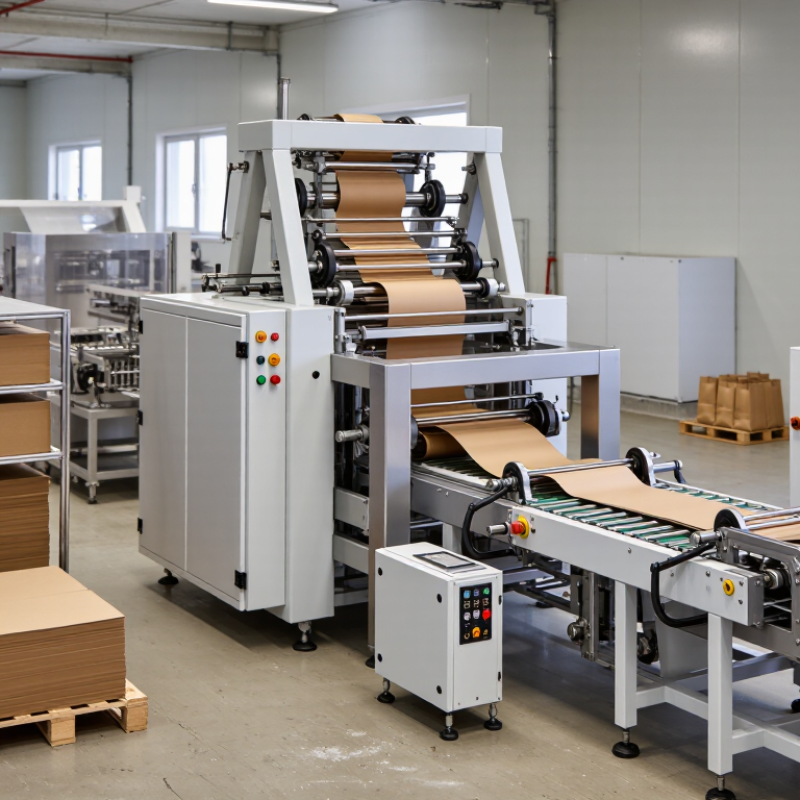
Choosing the right Sheet To Bag Paper Bag Machine is a production decision, not a simple equipment purchase. A machine may run quickly in a showroom, yet struggle with real kraft paper, uneven moisture, or frequent size changes. Operators notice these details first. Paper dust gathers near the feeder. Glue temperature drifts. Small alignment errors become rejected bags.

Industry research supports a careful approach. Smithers’ “The Future of Packaging to 2028” identifies sustainability, fiber-based formats, and production efficiency as important packaging trends. PMMI’s “2024 State of the Industry: U.S. Packaging Machinery” also highlights labor pressure, automation, and smarter machine controls. These reports do not choose a supplier for you. They clarify the questions you should ask about uptime, changeover time, energy use, material waste, and technical support.

Packaging consultant David Zwang offers a useful production principle: “The best package is the one that performs consistently at production speed.” That idea should guide every comparison. Check whether the Paper Bag Making Machine Sheet By Sheet handles your paper grammage, bag dimensions, handle style, and adhesive system. Request a factory trial using your actual paper rolls or sheets. Ask for measured output, not impressive promises. I have seen specifications look excellent on paper, while maintenance access remained inconvenient. That weakness matters. The best Sheet To Bag Paper Bag Machine balances speed with stable feeding, accurate folding, clean gluing, and simple operator control. It may not be the fastest option. It should be the most dependable one for your daily workload.

How to Choose the Best Sheet to Bag Paper Bag Machine?

Understanding Sheet-to-Bag Paper Bag Machine Requirements

Choosing the right sheet is central to reliable sheet-to-bag production. A China Paper Bag Making Machine Sheet By Sheet system needs paper with stable thickness, clean edges, and consistent moisture. These details affect feeding accuracy, folding quality, and handle strength. A practical starting point is to match the paper weight with the machine’s approved operating range.

Measure each sheet before production. Check length, width, GSM, moisture, and grain direction. Even a small size variation can shift the bottom fold by several millimeters. Paper that feels too dry may crack at the crease. Paper that feels damp may slip under the feeding rollers. Keep samples from different batches for comparison. Experience matters here.

Machine speed should not be the only target. Confirm the feeder supports the sheet size and stack height you require. Review the folding depth, glue application, printing alignment, and bottom forming settings. Run a small trial before ordering a large paper batch. Watch the first fifty bags closely. Look for skewed folds, open seams, and paper dust around the rollers. A perfect calculation is not enough. Sometimes, the sheet performs differently on a humid afternoon. That detail is easy to overlook. Reliable operators record these changes and adjust pressure, speed, or drying time carefully.

Matching Paper Type with Machine Compatibility

How to Choose the Best Sheet to Bag Paper Bag Machine?

Matching Paper Type with Machine Compatibility

Choosing paper by appearance alone can create feeding problems. Machine compatibility begins with sheet thickness, stiffness, moisture, and surface finish. Standard kraft paper usually feeds smoothly, but recycled sheets may vary between batches. That variation matters. A sheet that feels strong may still bend near the suction point.

Check the machine’s approved GSM range and maximum sheet dimensions. Then compare those figures with the paper supplier’s specifications. Grain direction also affects folding accuracy, especially on larger bags. Coated or printed sheets can slide during feeding, while rough surfaces may increase friction. Operators should inspect curling, edge damage, and static before production begins.

A High-Quality Paper Bag Making Machine Sheet By Sheet process needs stable sheet separation. Excess moisture can cause double feeding. Very dry paper may create static and misalignment. Short trials are essential. Run several hundred sheets, not just ten. Watch the feeder, creasing line, handle area, and finished bag shape. No chart replaces a real trial. A perfect paper choice on paper can still fail in a busy workshop. That is an inconvenient truth. Record the results, adjust feeder pressure carefully, and keep samples from every approved paper batch.

Selecting the Correct Paper Size and Thickness

Choosing the correct paper size and thickness is central to stable bag production.

Start with the finished bag dimensions, then add allowances for side folds, bottom folds, and sealing areas. A sheet that is too narrow may create weak seams. An oversized sheet can increase waste and disturb machine alignment. Measure the stack carefully. Small errors become visible after hundreds of bags.

Paper weight, usually measured in GSM, affects feeding, creasing, gluing, and bag strength.

Thin paper runs quickly, but it may wrinkle around sharp folds. Heavier paper feels stronger, yet it can resist bending and require slower machine settings. Check both GSM and caliper, because two papers with the same weight can have different thicknesses. Paper grain direction also matters, especially near the bag bottom and handles.

Before full production, run a small trial using the actual sheet lot.

Inspect folded corners, glue contact, mouth opening, and bottom squareness. Stable moisture and temperature help reduce curling, but storage conditions are often overlooked. I have seen a suitable specification perform poorly after careless storage. Record speed, tension, folding position, and adhesive results during testing. A setting that worked yesterday may fail today. Adjust gradually, and question the paper before blaming the machine.

Evaluating Machine Capacity and Production Speed

Choosing a sheet-to-bag machine starts with capacity, not the highest advertised speed. FAO’s Pulp and Paper Capacities Survey reports global paper and paperboard production at roughly 420 million tonnes annually. That scale reflects strong material availability, but it does not guarantee efficient bag production. Sheet size, paper thickness, handle design, and feeder stability directly affect output.

For a CE Certification Paper Bag Making Machine Sheet By Sheet, compare rated speed with usable speed. A machine rated at 200 bags per minute can theoretically produce 96,000 bags during an eight-hour shift. At 80% operating efficiency, practical output falls to about 76,800 bags. That difference matters. PMMI production studies repeatedly identify downtime, changeovers, and material handling as major causes of lost capacity. Ask for trial data, not only catalog figures.

Check the feeder carefully. Uneven sheets can create double feeds, skewed folds, and frequent stoppages. Short changeover time is valuable when orders vary by size. A 12-minute adjustment may seem minor, yet five daily changes consume one production hour. Operators should record speed, rejects, stoppages, and actual good bags per minute. The first calculation is rarely perfect. Humidity, recycled fibers, and adhesive behavior can alter results. A slower machine with stable feeding may outperform a faster model on the factory floor.

Checking Bag Dimensions and Handle Options

When choosing a sheet-fed paper bag machine, start with the finished bag, not the machine brochure. Measure bag width, height, bottom gusset, and folded edge precisely. These dimensions influence sheet size, feeding accuracy, and production stability. I have seen small measurement errors create crooked bottoms and uneven side seams. That mistake is expensive.

Leave enough allowance for folding, gluing, and handle placement. Confirm paper thickness, grain direction, and sheet flatness before machine testing. Test with real sheets. Paper that curls slightly may feed differently from laboratory samples. A dependable Paper Bag Making Machine Sheet By Sheet Supplier should check these details with you. Their technicians should also provide adjustment ranges, not only maximum speed figures.

Handle choices require equal attention. Flat paper handles suit lightweight shopping bags and support quick application. Twisted paper handles offer a different grip and may need stronger bonding. Handle length affects carrying comfort, bag balance, and the required attachment position. Ask whether handles are applied inside, outside, or through reinforced holes. Request samples with full load testing. Do not accept vague assurances.

Humidity can change paper stiffness and adhesive performance. That detail is easy to overlook. Your first machine setting may be wrong. Record each trial, including sheet weight, handle length, glue amount, and stacking time. Then compare the bag after several hours, not immediately after production.

Comparing Automation, Maintenance, and Operating Costs

How to Choose the Best Sheet to Bag Paper Bag Machine?

Choosing a sheet-to-bag machine starts with total cost, not its quoted speed. Automation can reduce manual feeding, alignment errors, and changeover labor. PMMI’s 2024 State of the Industry report identifies labor availability as a continuing packaging challenge. This makes automatic registration and recipe storage valuable. However, advanced controls add purchase and training costs. At 100 bags per minute, 85% uptime, and one eight-hour shift, output reaches about 40,800 bags. A lower-speed machine may still win if it produces less waste.

Maintenance quietly controls profitability. The U.S. Department of Energy reports that compressed-air leaks can waste 20–30% of compressor output. Inspect valves, cylinders, sensors, and glue systems during a factory visit. Ask for mean time between failures, recommended service intervals, and spare-part lead times. A machine with simple access panels may save more money than a faster machine. That detail is easy to overlook.

Operating cost calculations should include electricity, adhesives, labor, rejected bags, and planned downtime. Smithers’ paper-packaging market forecasts show continued demand for efficient paper conversion, but demand does not guarantee margin. Compare real production samples, not laboratory claims. Request a 24-hour trial using your paper grade and handle format. I would also question optimistic uptime figures. A practical target must reflect cleaning, roll changes, operator breaks, and occasional faults. The cheapest machine on paper can become expensive beside a silent, underused production line.

How to Choose the Best Sheet to Bag Paper Bag Machine? - Comparing Automation, Maintenance, and Operating Costs
Indicative comparison for a standard flat-handle or twisted-handle paper bag line using 70–120 g/m² kraft paper. Figures are typical planning ranges rather than quotations. Operating cost excludes paper, rent, financing, taxes, and shipping; actual results depend on bag size, paper specification, labor rates, and utilization.
Evaluation Dimension Basic Semi-Automatic Line Standard Automatic Line High-Speed Automatic Line
Typical production format Sheet feeding, forming, gluing, and manual or semi-automatic collection Automatic sheet feeding, tube forming, bottom forming, gluing, and counting Integrated high-speed forming, bottoming, counting, inspection, and automatic stacking
Suitable production volume Small batches, seasonal orders, and frequent product changes Stable daily production with several standard bag sizes Large-volume production with long runs and high machine utilization
Typical finished-bag output 2,000–5,000 bags per hour 5,000–10,000 bags per hour 10,000–18,000 bags per hour
Recommended staffing 3–5 operators per shift, including material handling 2–3 operators per shift, including quality checking 1–2 operators per shift, plus a shared technician or supervisor
Automation level Low to medium Medium to high High
Changeover time between common sizes 45–90 minutes 25–60 minutes 20–45 minutes when tooling and recipes are prepared
Typical start-up waste 4%–8% 2%–5% 1.5%–4%
Expected line availability 70%–82% 78%–88% 82%–92%
Connected electrical load Approximately 12–25 kW Approximately 25–45 kW Approximately 45–75 kW
Estimated electricity use 0.20–0.35 kWh per 1,000 bags 0.16–0.28 kWh per 1,000 bags 0.14–0.24 kWh per 1,000 bags
Routine maintenance workload Daily cleaning, manual lubrication, belt adjustment, and frequent glue-system checks Scheduled lubrication, sensor cleaning, glue-system service, and weekly alignment checks Preventive maintenance, servo and sensor diagnostics, filter replacement, and planned tooling checks
Typical maintenance time 2–4 hours per week 3–6 hours per week 5–10 hours per week, normally planned during production breaks
Common wear parts Belts, rollers, knives, glue nozzles, bearings, and suction cups Belts, rollers, knives, glue nozzles, sensors, bearings, and pneumatic seals Servo-related components, sensors, precision rollers, knives, pneumatic seals, and tooling
Recommended spare-parts stock About 2%–4% of machine purchase price About 3%–5% of machine purchase price About 4%–7% of machine purchase price
Typical equipment investment USD 60,000–140,000 USD 140,000–300,000 USD 300,000–650,000
Estimated annual maintenance budget 2%–4% of equipment purchase price 3%–5% of equipment purchase price 4%–7% of equipment purchase price
Indicative labor cost per 1,000 bags USD 1.20–2.50 USD 0.60–1.30 USD 0.35–0.80
Indicative energy cost per 1,000 bags USD 0.03–0.08 USD 0.02–0.06 USD 0.02–0.05
Indicative maintenance and consumables cost per 1,000 bags USD 0.20–0.55 USD 0.15–0.40 USD 0.15–0.45
Estimated non-paper operating cost per 1,000 bags USD 1.43–3.13 USD 0.77–1.76 USD 0.52–1.30
Break-even utilization guidance Usually suitable below 1.0 million bags per month Commonly attractive at approximately 1.0–3.0 million bags per month Generally requires more than 3.0 million bags per month or long, continuous runs
Best choice when Capital is limited, orders are irregular, and flexibility is more important than labor efficiency Demand is consistently high and the plant can maintain high utilization with limited changeovers
Primary purchasing risk Higher labor dependence, inconsistent output, and greater sensitivity to operator skill Insufficient training or poor setup control can reduce the expected productivity benefit High initial investment may be difficult to recover if orders are seasonal or machine utilization is low
Selection recommendation Choose when flexibility and lower initial investment outweigh labor costs Choose only after confirming sufficient monthly volume, technical support, and spare-parts availability
Cost assumptions: electricity at USD 0.12–0.20 per kWh; labor calculated from a fully loaded shift-labor rate of approximately USD 12–25 per hour. Paper is excluded because it normally represents the largest and most variable portion of total bag cost.

FAQS

Which bag dimensions should be measured before choosing a sheet-fed machine?

Measure width, height, bottom gusset, and folded edge precisely. Small errors can create crooked bottoms and uneven side seams. Measure twice.

Why are paper properties important during machine testing?

Check paper thickness, grain direction, and sheet flatness first. Slightly curled sheets may feed differently from laboratory samples. Use your actual paper.

How much allowance is needed for folding, gluing, and handle placement?

The allowance must match the finished bag design and paper behavior. Confirm it through physical samples, not only drawings. Guessing here is risky.

Which handle options are suitable for paper shopping bags?

Flat paper handles suit lightweight bags and support quick application. Twisted handles provide a different grip and may need stronger bonding. Handle length affects balance.

What should be checked about handle attachment?

Ask whether handles attach inside, outside, or through reinforced holes. Test samples with a realistic carrying load. Do not accept vague assurances.

How can humidity affect production?

Humidity can change paper stiffness and adhesive performance. A setting that works in the morning may fail later. Record conditions during every trial.

Is the fastest machine always the best choice?

No. Automation may reduce feeding errors, alignment problems, and changeover labor. Yet advanced controls increase purchase and training costs. Output alone can mislead.

What costs should be included when comparing machines?

Include electricity, adhesive, labor, rejected bags, maintenance, and planned downtime. A slower machine may cost less if it creates less waste. My estimate may still change.

How should maintenance capability be evaluated?

Inspect valves, cylinders, sensors, glue systems, and access panels. Ask about service intervals, failure history, and spare-part delivery times. Simple access can save money.

What production trial gives the most useful information?

Request a long trial using your paper grade and handle format. Record settings, output, waste, cleaning time, and stoppages. Check the bags again after several hours.

Conclusion

Choosing the right Sheet To Bag Paper Bag Machine begins with understanding your production requirements, including the desired bag style, daily output, and level of automation. The paper type must match the machine’s feeding and forming capabilities, while sheet size, thickness, and material strength should be checked carefully to ensure stable operation and consistent bag quality. It is also important to confirm the machine’s compatible bag dimensions and available handle options before making a decision.

Production capacity and running speed should align with your order volume without sacrificing forming accuracy. In addition, compare automation features, ease of adjustment, maintenance requirements, spare-part accessibility, energy use, and overall operating costs. A well-selected machine should provide reliable performance, flexible production, simple maintenance, and a reasonable long-term investment. By evaluating these factors together, buyers can choose equipment that supports efficient manufacturing and meets their specific paper bag requirements.

Nathan

Nathan

Nathan is a dedicated marketing professional at Zhengbo Intelligent Machinery, where he specializes in promoting the innovative luxury bag-making machines offered by the company. With a deep understanding of the industry, Nathan consistently updates the company’s professional blog, sharing insights......
Previous Top Machine Made Kraft Paper Bag Manufacturers Worldwide