So, choosing a Shopping Bag Machine in 2026? It's not just about price tags and how many bags per minute a brochure promises. The real decision ties together bag design, how materials behave, labor costs, factory space, and what kind of service you'll get down the road. A machine that claims 180 bags per minute can sound tempting, sure—but that number doesn't mean much if feeding is unstable, folding is off, or handles get placed inconsistently.
This guide looks at the practical side of Shopping Bag Machine Making from a buyer's point of view. We're talking paper weight, bag dimensions, printing options, glue systems, electrical needs, and operator training. Buyers should ask for test samples using their own paper rolls. Small stuff matters. A loose fold can make a brand look bad. Uneven glue can lead to expensive returns. And a noisy motor? That might be a warning sign about future maintenance headaches.
Evaluating suppliers takes evidence, not just vibes. Check installation records, warranty terms, spare-parts availability, and documented quality controls. Ask for production videos, but don't rely on videos alone. A factory visit or a live online demo can reveal setup limits you'd otherwise miss. The search phrase Paper Shopping Bag Making Machine For Name Shopping might help someone find specialized equipment, though the wording isn't perfect and can bring up confusing results. Worth keeping in mind. Search terms don't replace technical judgment.
No checklist is perfect. Still, a structured comparison can cut down on avoidable mistakes. By matching machine capability with realistic orders, available staff, and planned growth, buyers can choose equipment with more confidence. Reliable decisions come from verified data, careful testing, and being honest about operational limits.
Define Your Shopping Bag Production Needs
How to Choose a Shopping Bag Making Machine in 2026?
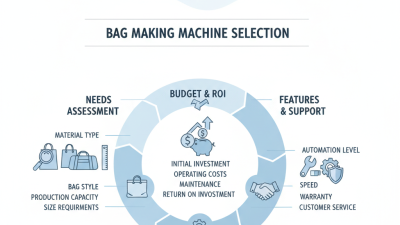
Define Your Shopping Bag Production Needs
Before comparing machines, measure your actual orders. Record bag width, height, gusset depth, paper weight, handle style, and daily output. A small retailer may need 2,000 bags daily, while a packaging supplier may require 20,000. These figures lead to very different equipment decisions.
Material behavior matters. Kraft paper can tear around the handle if the paper grade is too light. Recycled paper may also need careful tension control during forming. I once underestimated changeover time on a mixed-size production line. The machine looked fast, but frequent adjustments reduced real output. That mistake changed how I evaluate capacity.
Ask for a production trial using your own paper and bag dimensions. Check print registration, bottom folding, handle strength, glue consistency, and waste percentage. A reliable supplier should provide technical data, maintenance guidance, operator training, and clear safety documentation. Do not judge performance from speed alone. China Paper Shopping Bag Making Machine For Name Shopping may appear in online searches, but buyers should verify whether the machine matches their materials and application.
Consider future needs without buying unnecessary features. Automatic size adjustment can support changing orders, while simple controls may reduce training time. Inspect access to rollers, sensors, and adhesive units. Spare parts availability also affects downtime. Leave room for improvement. Your first production forecast may be imperfect, and that is normal; real order data should guide the final machine specification.
Compare Bag Types, Materials, and Machine Compatibility
Choosing a shopping bag machine in 2026 starts with the bag, not the machine. Material decides everything. Paper bags need accurate creasing, controlled glue application, and stable forming pressure. Recycled paper may contain shorter fibers, creating more dust and weaker handles. Virgin kraft paper usually runs more consistently, but it can require different folding pressure.
FAO forestry statistics recorded global paper and paperboard production at approximately 420 million tonnes in 2022. Smithers’ 2024 paper-packaging outlook also forecasts continued market growth through 2029. These figures support paper’s strong industrial position, but they do not make every machine suitable. Flat-handle bags, twisted-handle bags, and cord-handle bags require different attachment units. A machine designed for thin food bags may struggle with thick retail paper.
During a machine evaluation, test the exact paper grade and bag dimensions. Watch the handle area closely. Check whether glue reaches the corners without leakage. I once trusted a speed specification and overlooked paper dust. That mistake caused uneven folds and repeated stoppages. Real production is less tidy than a brochure suggests. A High-Quality Paper Shopping Bag Making Machine For Name Shopping should match material thickness, handle design, bag width, and expected output. Use sample rolls, not promises. Small trials reveal large problems.
Evaluate Machine Capacity, Speed, and Production Efficiency
Choosing a shopping bag making machine starts with real production demand, not the highest advertised speed. Smithers’ paper packaging market data shows continued global growth through 2029, but demand varies by bag size, handle style, paper weight, and order volume. A machine rated at 250 bags per minute may produce far less during changeovers or material adjustments.
Measure effective output across a full shift. Record running speed, downtime, waste, operator loading time, and changeover minutes. A practical target is often 80–90% of the stated speed, not 100%. The machine should also match your peak order volume without running continuously at its limit. Faster is not always better. Excessive speed can increase misalignment, glue faults, and rejected bags. The 2024 PMMI industry research on automation also highlights labor efficiency and faster changeovers as major investment drivers. That supports choosing flexible controls, not only a larger motor.
Tips: Request a production trial using your paper, dimensions, and handle design. Ask for verified bags per minute and hourly waste records. When searching for a
CE Certification Paper Shopping Bag Making Machine For Name Shopping, check the technical file, conformity documents, safety guards, and electrical specifications. CE marking supports compliance assessment, but it does not prove capacity or product quality. One detail is easy to miss: test the machine after warm-up, during reel changes, and with less experienced operators. That imperfect test may reveal the real production limit.
Review Automation Features and Operating Requirements
How to Choose a Shopping Bag Making Machine in 2026?
Automation should reduce daily decisions, not create a more complicated machine. During a machine audit, I check servo-driven forming, automatic tension control, edge alignment, and fault detection first. These features stabilize bag length when film tension changes. They also reduce manual adjustments during long production runs. Shorter changeovers matter.
The International Federation of Robotics reported 541,302 industrial robots installed worldwide in 2023. This signals growing confidence in automated production, but more automation is not always better. PMMI’s 2024 packaging machinery trends research highlights connectivity, predictive maintenance, and integrated controls as major priorities. A useful machine should record temperature, speed, waste, and downtime in clear language. Avoid systems that hide basic settings behind complicated screens.
Operating requirements need equal attention. Ask whether one trained operator can load materials, adjust handles, and clear minor faults safely. Check power demand, compressed-air quality, floor space, noise, and cleaning access. A dust-filled workshop can weaken sensors quickly. Paper and film also behave differently in humid conditions. I would test both materials before purchasing. A fast demonstration may look impressive. It can still conceal unstable sealing after several hours. Leave room for doubt, and measure actual waste during a full shift.
Calculate Total Costs, Maintenance, and Return on Investment
How to Choose a Shopping Bag Making Machine in 2026?
The lowest purchase price rarely means the lowest total cost. Evaluate the shopping bag with handle making machine across its complete production life. Include delivery, installation, training, electrical upgrades, tooling, and initial spare parts. A machine may cost less but consume more electricity or require extra operators. That difference grows every month. Calculate the cost per thousand bags, including film, handles, ink, labor, waste, and packaging. Request realistic output data, not only the maximum speed shown in a brochure.
Maintenance directly affects return on investment. Ask about lubrication points, replacement intervals, sensor availability, and technical response times. Record expected downtime for blade changes and handle adjustments. One unplanned stoppage can erase several days of profit. Use this formula: monthly profit divided by total investment equals the approximate payback period. Include financing costs and rejected bags. I have seen estimates fail because scrap was treated as zero. That assumption needs challenging.
Tips: Test your common bag sizes before purchasing. Measure actual cycle speed, noise, energy use, and waste. Keep a maintenance log from day one. Compare three production scenarios: low, normal, and peak demand. A machine that performs well only at peak speed may disappoint during routine orders. Leave room for operator learning and imperfect material quality.
How to Choose a Shopping Bag Making Machine in 2026?
Five-year total cost and estimated return on investment by machine configuration
The comparison uses planning estimates in USD for machine purchase, installation, five-year maintenance, energy, and labor-related operating costs. Estimated ROI assumes stable production demand and is calculated as five-year net operating benefit divided by the initial investment. Actual results vary with production volume, labor rates, material waste, and machine utilization.
Check Safety Standards, Supplier Support, and Future Scalability
How to Choose a Shopping Bag Making Machine in 2026?
Safety should be checked before production speed or purchase price. Ask for documented risk assessments, protective guards, emergency stops, and electrical safety records. Confirm the machine supports your local workplace requirements. Request a live demonstration with your actual paper, handles, and bag dimensions. Small faults often appear during changeovers, not during polished showroom tests. That happened in our trial.
Supplier support can protect your investment when production stops unexpectedly. Ask about installation, operator training, spare parts, software updates, and response times. A reliable supplier should provide clear manuals and practical troubleshooting videos. Speak with several existing users, if possible. Their experience may reveal maintenance delays that sales documents never mention. Do not accept vague promises.
Future scalability deserves equal attention. Choose a machine with adjustable formats, modular stations, and upgrade options. Check whether it can handle new materials without excessive tooling changes. Review maximum speed, energy use, floor space, and staffing needs together. A fast machine may become inefficient if cleaning takes hours. Forecasts are often wrong, including ours. Leave room for slower growth and unexpected product changes. Request sample bags from two future sizes before signing. A useful machine should remain safe, serviceable, and adaptable as your orders evolve.
ZB1260RS-450 High-Speed Automatic Handbag Making Machine: Features, Benefits, and Production Efficiency
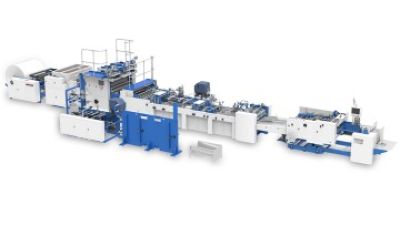
The high-speed automatic handbag-making machine is designed to improve both output and operating efficiency in commercial paper-bag production. Its roll-feeding system reduces paper-loading time and limits interruptions during material changes, while increasing feeding capacity by more than 20% compared with conventional flat-sheet feeding. This configuration is especially suitable for shopping bags used in food, footwear, apparel, and e-commerce applications. According to FAO forestry statistics, global paper and paperboard production has remained above 400 million tonnes annually in recent years, reflecting the continuing scale of paper-based packaging demand.
Production flexibility is further supported by full-servo, hand-operated slitting, which can reduce material waste by approximately 6–8 kg per day compared with traditional paper-bag equipment. Operating at 50–100 bags per minute, the machine can help manufacturers respond to larger orders while maintaining consistent bag dimensions and processing stability. Industry analysis published in *The Future of Global Paper Packaging to 2028* also identifies e-commerce, food delivery, and recyclable packaging as important drivers of demand, making higher-speed and lower-waste converting equipment increasingly valuable for modern factories. Its roll-fed structure and automated controls allow operators to shorten changeover periods and maintain a more continuous production rhythm.
Conclusion
Choosing the right shopping bag machine in 2026 begins with a clear understanding of your production needs, including bag size, design, material, daily output, and expected growth. Compare the machine’s compatibility with paper, plastic, or other approved materials, and evaluate its speed, capacity, forming accuracy, and overall production efficiency. A suitable Shopping Bag Machine Making solution should match your current orders while allowing enough flexibility for future product variations.
It is also important to review automation features, operator requirements, energy use, maintenance procedures, and workplace safety functions. Calculate the complete investment by considering purchase costs, installation, consumables, repairs, downtime, and expected return on investment. Finally, assess supplier training, technical support, spare-part availability, compliance with applicable safety standards, and opportunities for later upgrades. A careful comparison will help you select reliable equipment that improves productivity, controls long-term expenses, and supports sustainable business growth.