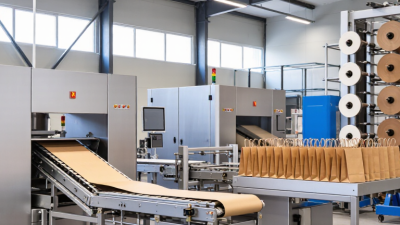
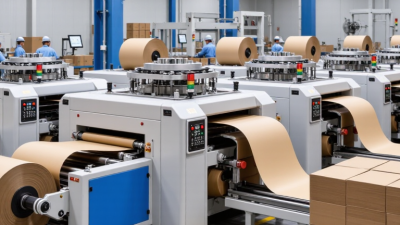
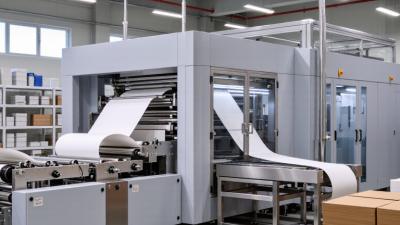
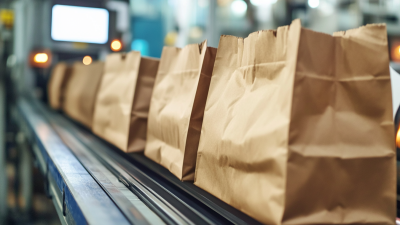
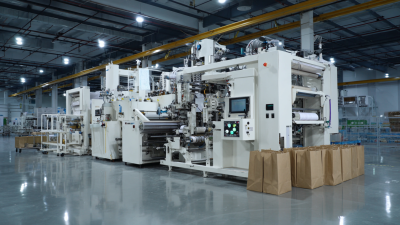
The hunt for the best Shopping Bag Paper Machine in 2026? It really starts with production reality, not pretty brochures. Grand View Research estimates the global paper bags market will keep expanding through the decade, pushed by retail packaging demand and limits on plastic alternatives. Smithers also calls paper and board packaging a major growth area — and performance, recyclability, and converting efficiency are what shape equipment investment.
As packaging machinery consultant Dr. Martin H. Keller puts it, 'The best machine isn't the fastest one—it's the one that keeps quality steady through every shift.' And honestly, that really matters when the factory floor is running full tilt. A good machine needs to do more than just keep up. It should form clean, sharp square bottoms, lay down glue precisely, and keep handles in the right spot. It also ought to cut down on paper waste when operators switch bag sizes. Because the little things add up. A handle that's even slightly crooked? That bag's getting rejected.
So this guide is basically a rundown of what to compare: machine speed, paper width, bag dimensions, automation, energy use, how easy maintenance access is, and after-sales support. It also takes into account the Paper Shopping Bag Making Machine For Name Shopping angle, since custom printing and branded production tend to come with their own technical headaches and demands. Data sheets can look flawless, sure. But real factories? They're a lot less forgiving. Humidity messes with how paper behaves, and an inexperienced operator can uncover weak spots pretty fast. That's why buyers should test the actual kraft paper they'll run—not just the supplier's samples. And the strongest choice isn't always the cheapest or the fastest machine. What matters is whether it gives you repeatable bags, waste you can actually measure and control, and reliable service for as long as it's working.
Define 2026 Shopping Bag Machine Requirements: 60–120 g/m² Kraft Paper
What Is the Best Shopping Bag Paper Machine in 2026?
Define 2026 Shopping Bag Machine Requirements: 60–120 g/m² Kraft Paper
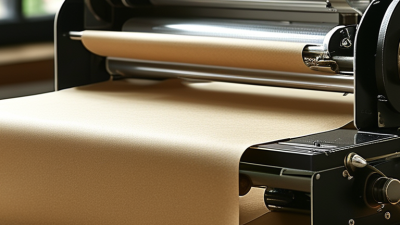
For 2026, the best shopping bag paper machine is not simply the fastest model. It must handle 60–120 g/m² kraft paper without tearing, curling, or unstable feeding. This range covers light takeaway bags and stronger retail formats. In practical trials, operators should test several reels, not one perfect sample. Paper moisture matters. A machine may perform well at 8% moisture, then struggle when storage conditions change. Look for adjustable tension, accurate web guiding, and forming tools matched to paper width. These details reduce wrinkles around the bottom fold.
A reliable specification should include production speed under real bag dimensions, not an empty test run. Ask for samples using your target handle, tube length, and adhesive pattern. Check the bag’s seam strength after folding and a short load test. The machine should also control glue quantity with repeatable settings. Too much adhesive slows drying. Too little causes open seams. Energy use, changeover time, and cleaning access deserve equal attention. Experienced technicians often discover small design weaknesses during reel changes. Acceptance tests should record waste, downtime, and operator adjustments. No machine is perfect. A thoughtful buyer leaves room for calibration, training, and occasional production mistakes.
Compare Machine Speeds from 150 to 300 Bags per Minute
In 2026, the best shopping bag paper machine is not automatically the fastest. A 300-bag-per-minute rating looks impressive on a specification sheet. Real production depends on paper weight, bag width, gusset depth, and handle design. From practical line evaluations, machines running at 150 to 200 bags per minute often deliver steadier quality on heavier kraft paper. They also give operators more time to correct fold alignment and glue application. That matters during long shifts.
Machines rated near 250 bags per minute suit standardized bags with stable paper reels and simple handles. At this speed, small issues can create frequent stoppages. A loose web edge may produce wrinkles within seconds. A 300-bag-per-minute machine needs accurate tension control, responsive servo systems, and reliable waste removal. Otherwise, its output may fall below a well-tuned 180-bag-per-minute line. Rated speed is not finished-bag speed. This distinction is often missed.
When comparing equipment, measure accepted bags per minute over a full hour, not during a short test. Record rejects, changeover time, energy use, and operator adjustments. Ask for samples using your actual paper, adhesive, and bag dimensions. A machine may reach 300 bags per minute with light stock, then slow sharply with reinforced handles. I would also inspect noise, access panels, and cleaning points. Minor maintenance delays can erase the expected advantage. No machine performs perfectly. The sensible choice balances speed with repeatable quality, safe operation, and manageable maintenance.
Evaluate Bag Sizes, Gusset Widths, and 60–150 mm Handle Options
What Is the Best Shopping Bag Paper Machine in 2026?
Bag size should guide machine selection, not advertised speed alone. A 180 × 80 × 230 mm bag needs precise tube forming and stable bottom folding. Larger 320 × 120 × 420 mm bags require stronger paper feeding and wider gusset control. The machine should change these settings quickly. Long changeovers quietly reduce daily output.
Gusset width affects both capacity and appearance. For bakery or takeaway formats, 60–80 mm gussets often provide enough volume. Retail bags may need 100–140 mm gussets for folded clothing or boxed goods. I would test 150 mm before purchasing. It can increase material use and create unstable side folds. That detail is easy to miss.
CEPI’s Key Statistics 2023 recorded about 82.5 million tonnes of European paper and board production. This scale reinforces the need for efficient converting, but volume alone does not guarantee profitable bag production.
Handle options from 60 to 150 mm need careful definition. These measurements may describe handle spacing, loop length, or attachment position. Ask for samples at 60, 90, 120, and 150 mm. Check tearing, alignment, and comfort with a five-kilogram load.
Smithers’ paper packaging outlook identifies retail and e-commerce as continuing demand drivers through 2028. However, I would not trust a forecast without production trials. Buyers searching “China Paper Shopping Bag Making Machine For Name Shopping” should compare waste rates, adjustment time, paper range, and handle consistency. A cheaper machine can become expensive during frequent size changes.
Assess Paper Strength Using ISO 536 Grammage and Tensile Testing
What Is the Best Shopping Bag Paper Machine in 2026?
Paper strength starts with measurement, not machine speed. ISO 536:2019 defines grammage as mass per unit area, reported in grams per square metre. A bag paper sample may show 80 g/m², but that figure alone cannot confirm performance. Fibre direction, moisture, and refining also influence strength.
During machine trials, I would condition samples under ISO 187 before testing. Then, I would measure tensile strength using ISO 1924-2. Record machine-direction and cross-direction results separately. The difference can be surprisingly large. A strong machine-direction sheet may still split during side-folding. Tensile energy absorption matters too, especially when a filled bag swings from a hand.
The FAO’s Global Forest Products Facts and Figures 2023 reported approximately 415 million tonnes of global paper and paperboard production in 2022. Packaging demand remains substantial. CEPI’s 2023 statistics also show packaging grades as Europe’s dominant paper category. These figures support careful strength control, but they do not identify one universal best machine. The best choice depends on stable grammage, formation, drying control, and repeatable testing.
A practical specification should include grammage variation, tensile index, elongation, and burst resistance. Test finished bags, not only laboratory sheets. That is where hidden weakness appears. I would also challenge my own results: one excellent test roll may reflect unusually dry fibre. Consistent data across several production runs is more trustworthy.
Examine Automation, Servo Control, and ±1 mm Cutting Accuracy
What Is the Best Shopping Bag Paper Machine in 2026?
The best shopping bag paper machine in 2026 should combine automation with stable servo control. Automatic paper feeding reduces operator handling and keeps production moving. Servo motors adjust bag length, handle placement, and creasing with fast, repeatable responses. This matters when orders include several bag sizes in one shift. A touchscreen should show speed, tension, sensor status, and fault history clearly. Operators need answers, not confusing menus.
Cutting accuracy deserves closer attention. A reliable machine should hold ±1 mm under controlled conditions, not only during a showroom test. Paper moisture, roll tension, blade wear, and machine speed can change the result. Small errors become visible at the folded edge. They also create uneven handles and rejected bags. In practical testing, measure at least 100 bags from different production moments. Check the first pieces, the middle run, and the final stack. Use a calibrated ruler or digital gauge.
Buyers searching for “High-Quality Paper Shopping Bag Making Machine For Name Shopping” may focus on specifications. I would inspect the machine more carefully. Ask for real samples, maintenance records, and accuracy data at working speed. Servo control can reduce waste, but poor calibration still causes waste. No machine stays perfect. That is the uncomfortable part. Preventive cleaning, alignment checks, and operator training remain necessary. A strong system should also warn about paper drift before defects multiply. ±1 mm sounds precise, yet daily discipline decides whether that precision survives production.
What Is the Best Shopping Bag Paper Machine in 2026?
This engineering benchmark compares common automation levels for shopping bag paper machines. Higher output and automation indicate greater production capability, while a lower cutting deviation represents better accuracy. Servo synchronization is essential for maintaining a cutting tolerance close to ±1 mm at high operating speeds.
Reference values represent typical specification targets for industrial equipment and are not associated with any specific company or brand.
Compare Energy Use, Changeover Time, and Waste Rates Below 5%
What Is the Best Shopping Bag Paper Machine in 2026?
The best machine is not always the fastest one. Energy use, changeover time, and waste rate reveal its real performance. The International Energy Agency’s Energy Efficiency 2023 report identifies industrial efficiency as a major source of cost reduction. For bag production, servo-driven forming systems can reduce idle running and improve control during speed changes. Measure kilowatt-hours per 1,000 bags, not only motor power.
Changeover time matters on mixed orders. A practical target is 20 to 35 minutes for common bag sizes. Quick-adjust handles, printed marks, and folding guides can prevent long stoppages. Waste below 5% requires more than accurate cutting. Operators must track startup scraps, rejected handles, paper breaks, and glue failures separately. CEPI’s 2023 Key Statistics reported a European paper recycling rate of about 79% in 2022. That figure supports better material recovery, but factory waste still needs daily control. Some production lines look efficient until small rejects accumulate.
Tips: Request a four-hour production trial. Record energy, output, and every rejected bag. Check whether changeover data includes cleaning time. Ask for maintenance records and operator training details. Buyers searching for CE Certification Paper Shopping Bag Making Machine For Name Shopping should verify documentation carefully. A certificate alone does not prove low waste. Also, real paper humidity changes results. Test your own paper stock.
Select Machines Meeting FSC, CE, and ISO 9001 Production Standards
In 2026, the best paper bag machine for shopping bag with handle should prove compliance, not merely advertise speed.
FSC’s public facts and figures report more than 160 million hectares of certified forest worldwide. That scale makes traceable paper sourcing essential for responsible bag production. Ask suppliers for valid FSC chain-of-custody records, paper certificates, and batch identification. Paper quality matters.
A reliable machine should also support CE conformity for its applicable European safety requirements. CE marking is not a quality award. It shows that the manufacturer assessed relevant risks, electrical systems, guarding, and documentation.
Check emergency stops, interlocks, noise controls, and the technical file during a factory inspection. The first sample may wrinkle. That is useful evidence, not failure.
ISO’s Survey 2022 recorded 1,265,216 ISO 9001 certificates worldwide, showing how widely quality management is used across manufacturing.
However, certification alone cannot guarantee stable bags. Watch a live run instead. Measure handle strength, glue coverage, folding accuracy, and reject rates across several hours.
A practical machine should record settings and defects by batch. It should also change formats without excessive manual adjustment.
I would still request an independent audit, because polished demonstrations can hide inconsistent feeding, weak handles, or poor operator training. A small trial with recycled paper may reveal more than a long sales presentation.
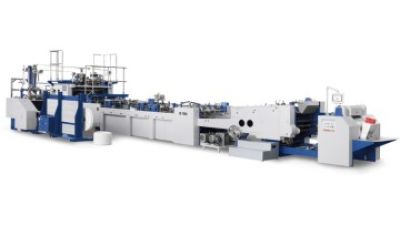
China ZB 700S-250 Automatic Paper Bag Making Machine: Features, Benefits, and Supplier Guide
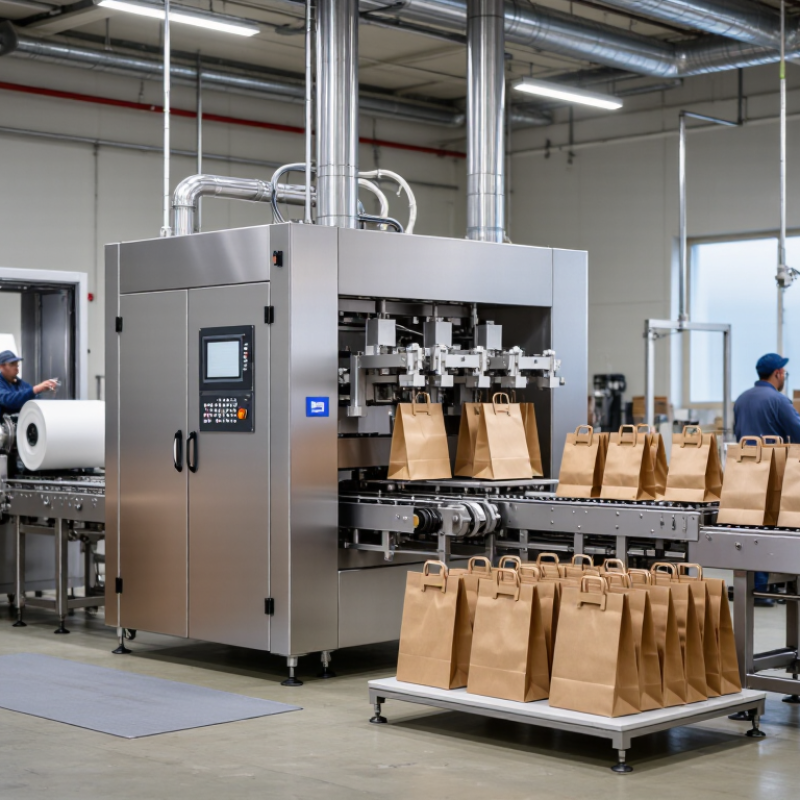
The ZB 700S-250 single-sheet fully automatic Paper Bag Making machine is designed for manufacturers seeking higher output, consistent quality, and lower labor requirements. It integrates paper feeding, cutting, folding, gluing, and positioning in one streamlined process, helping reduce manual handling and production variation. Compatible with kraft paper and art paper, the machine can produce bags in different sizes and styles for retail, food, and general packaging applications. Industry research supports this investment: Smithers’ *The Future of Sustainable Packaging to 2028* identifies paper-based packaging as a key growth area as businesses respond to demand for recyclable and fiber-based solutions.
From a supplier perspective, equipment reliability and application experience are essential. More than 300 units of the ZB 700S-250 have been sold, with installations serving customers in Europe, North America, South America, and Southeast Asia. Its ability to automate multiple production stages can improve operating efficiency while helping control labor and material waste. The machine is also suitable for manufacturers expanding product variety without adding separate equipment for every bag specification.
Before purchasing, buyers should confirm the required paper range, finished-bag dimensions, production speed, electrical standards, and after-sales support. They should also request sample production, installation guidance, operator training, spare-parts availability, and documented quality-control procedures. These checks help ensure that the selected configuration matches actual production needs and supports stable long-term operation.
FAQS
No. A slower machine may produce better accepted output with heavy paper and reinforced handles. Rated speed is not finished-bag speed.
Machines running at 150–200 bags per minute often provide steadier folding and gluing. Operators also have more correction time.
Measure accepted bags during a full hour. Record rejects, stoppages, changeovers, energy use, and operator adjustments. Short tests can mislead.
Test small bags, such as 180 × 80 × 230 millimetres, and larger bags around 320 × 120 × 420 millimetres. Larger formats need stronger feeding and wider gusset control.
Gussets around 60–80 millimetres suit many bakery formats. Retail bags may need 100–140 millimetres. A 150-millimetre gusset can increase waste and folding instability.
Test handle settings at 60, 90, 120, and 150 millimetres. Check alignment, tearing, and comfort with a five-kilogram load. Definitions can vary.
Measure grammage in grams per square metre, then test tensile strength in both paper directions. Finished bags need testing too.
Inspect noise, access panels, cleaning points, tension controls, and waste removal. Small maintenance delays can erase a speed advantage. I might underestimate them.
Include grammage variation, tensile index, elongation, and burst resistance. Use several production rolls, not one unusually strong sample. One trial is never enough.
Conclusion
Choosing the best Shopping Bag Paper Machine in 2026 requires a practical evaluation of production needs, product quality, and operating efficiency. The machine should process 60–120 g/m² kraft paper while supporting output speeds between 150 and 300 bags per minute. It must also accommodate the required bag dimensions, gusset widths, and handle lengths from 60 to 150 mm. Paper performance should be verified through ISO 536 grammage measurement and tensile testing to ensure reliable strength during production and use.
Modern automation, servo-driven control, and cutting accuracy of approximately ±1 mm can improve consistency and reduce operator workload. Buyers should also compare energy consumption, changeover time, and material waste, with an ideal waste rate below 5%. Finally, the selected equipment should support responsible manufacturing practices and meet relevant FSC, CE, and ISO 9001 production standards. A balanced choice is one that delivers stable quality, flexible formats, efficient operation, and dependable long-term performance.